
House Price Forecast

No bust no boom just rebalancing No bust, no boom, just rebalancing

No bust, no boom, just rebalancing

He The US housing market in 2026 is neither heading for a dramatic decline nor a wild boom. Instead, wait a period of Modest growth and gradual rebalancing.. Think of it less as a roller coaster and more as a steady climb, with a few bumps along the way. This is good news for many of you who have been waiting on the sidelines, feeling that sense of uncertainty about where things are headed. Real estate market predictions for 2026: no bust, no boom, just rebalancing As we approach the year 2026, I’ve been looking at all the reports and talking to people who live and breathe real estate. It seems that the feverish rhythm of a few years ago has definitely calmed down. We’re not seeing the crazy bidding wars or houses going off the market in one day like we saw during the pandemic. On the other hand, fears of a massive price drop also seem exaggerated. Here’s my opinion, based on what the experts say and what I’ve seen myself: the market is returning to a more normal pace. Prices will likely slowly rise and more homes will be sold, but it won’t be a story of explosive profits or devastating losses. What is driving this predictable path? So what gives me confidence in saying that things will be relatively stable? It’s a combination of economic factors, housing availability and, of course, the cost of borrowing money. Interest Rates: Still a Big Problem, But They’re Getting BetterThe days of getting a virtually free mortgage are long gone, and honestly, they probably won’t be back anytime soon. Experts say that the average 30-year fixed mortgage rate will float around 6.3% in 2026. That’s a little less than where we were, which is something to celebrate. However, it is still significantly higher than the super low rates we saw a few years ago. This higher cost of borrowing is one of the main reasons we won’t see a boom. It makes buying a home more expensive, which naturally slows down the rise in prices. I remember when getting a mortgage was practically like receiving free money. Now, everyone has to factor in that difference in the monthly payment, and it adds up quickly. It is a big obstacle for many potential buyers. More houses for sale, but not exactly overflowingOne of the biggest headaches for buyers in recent years has been the lack of homes to choose from. Fortunately, that outlook is improving. By 2026, we are expected to see the supply of homes for sale increase to approximately 4.6 months. This is a much healthier number than the 3 or 4 months we have been facing lately. Think of it this way: if new homes were not included, it would take approximately 4.6 months to sell those currently available. With more homes on the market, sellers might have to be a little more patient and perhaps a little more willing to negotiate. This additional supply is the main reason why sales figures are expected to increase, possibly reaching around 4.2 million homes sold. The economy: stable as it goesThe overall health of the economy plays a very important role. By 2026, we foresee fairly stable economic growth, with the Gross Domestic Product (GDP) It is expected to grow between 2% and 2.25%. He unemployment rate is predicted to be around 4.7%which is not bad at all. And inflation, while still a concern, is expected to stabilize somewhere between 2.3% and 3%These figures paint the picture of an economy that is not overheating, but not collapsing either. This type of environment supports a stable housing market, without sudden shocks that would spike or crash prices. A look at the numbers: what the experts say To give you a clearer picture, let’s look at some of the key predictions. Factor Current (estimate end of 2025) Projected (2026) Key takeaway Housing price change Slight drop/plateau +1% to +2.2% Modest and controlled growth, not a boom. Home sales volume ~4.08 million 4.13-4.26 million Gradual increase, but still below the pre-pandemic level. 30-year mortgage rate ~6.6% – 6.7% ~6.3% It remains high, which affects affordability. Inventory (Months) 3-4 months ~4.6 months Improved offer, relieving buyer pressure. GDP growth – 2% – 2.25% Constant economic expansion. Unemployment rate – ~4.7% Healthy labor market. Inflation – 2.3% – 3% Cooling down, but still a factor. As you can see, the numbers themselves tell a story of moderation. We are not entering a period of dramatic price falls like the 2006-2008 accidentnor are we looking at the double-digit percentage gains we saw in 2020-2022. Regional differences: it is not the same everywhere! One of the most important things to remember is that the American housing market is not a large, uniform mass. Where you are matters a lot. Cooling of the sun belt: Places like Florida and Texas, which saw massive growth, could actually cool off a bit. things like increased insurance costs (especially in Florida) and the fact that some areas might have been overbuilt could lead to Slightly lower prices or slower growth.. Rust Belt Rising (Slowly): On the other hand, Rust Belt cities, areas like Cleveland and parts of the Midwest, could see more steady and reliable gains. Because? because they are more affordable and we are seeing people move there in search of jobs and a lower cost of living. Let’s look at this in a table so that it is super clear: Region/Metro Projected price change (2026) Key driver Cleveland, Ohio, USA +3% to +4% Affordability, job stability Chicago, Illinois +2.5% Shortage of supply and urban reactivation Miami, Florida -2% to -3% Insurance increases, hurricane risks Austin, Texas, USA -1.5% Overconstruction, office returns New York Suburbs +2% Hybrid labor migration Los Angeles, California Department High costs, shifts within the metro This really shows that you can’t just look at the national numbers and expect them to apply to our country. The local economy, the job market, and even things like

No bust, no boom, just rebalancing Read More »
Goldman Sachs expects home prices to rise more than 4 Prices will rise 4.4%

Prices will rise 4.4%

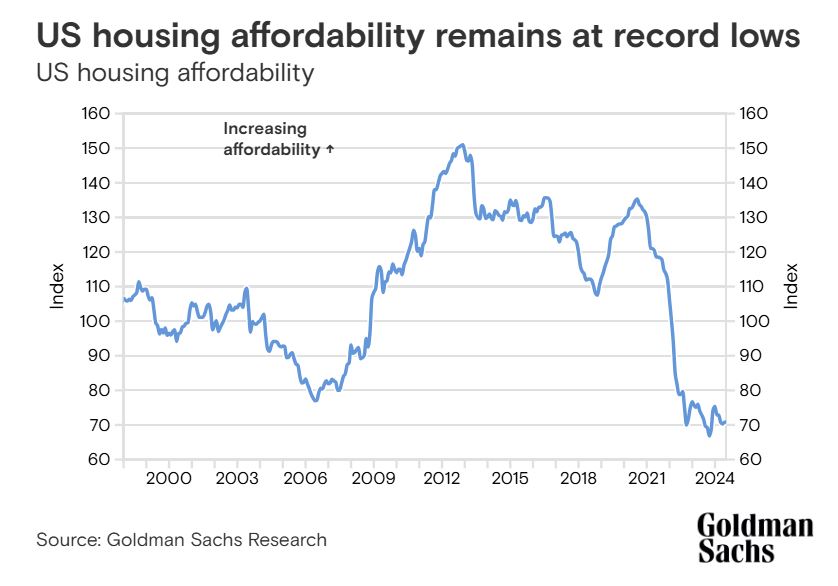
Imagine the hustle and bustle of a busy city where people are always on the go, especially when it comes to buying homes. Goldman Sachs predicts home prices will rise more than 4% in 2024 and 2025a projection that many are following closely as the real estate market continues to show signs of life. With factors such as changes in interest rates and the fluctuating job market at play, this forecast raises many questions about what it means for home buyers, homeowners and those looking to invest in property. Real estate market forecast for next year: prices will rise by 4.4% Key takeaways: House prices in the US they are expected to increase 4.5% in 2024 and 4.4% in 2025. Lower interest rates due to Federal Reserve Stocks are driving this rise. He housing supply remains limited, contributing to continued price appreciation. Recent mortgage rate decreases have not yet led to a significant increase in applications. different United States regions are experiencing varying levels of price growth, with the Midwest and Northeast showing the strongest increases. US Real Estate Market Outlook 🏠 House prices is expected to increase 4.5% in 2024 4.4% in 2025 📉 Interest rates Lower rates due to Federal Reserve behavior 📦 Housing offer remains limited contributing to price appreciation 📝 Mortgage applications No significant increase despite the recent the rate decreases 🗺️ Regional variations Midwest and Northeast demonstration stronger increases The real estate market has always been influenced by a multitude of factors, and recent analysis from Goldman Sachs sheds light on what the future could hold. Goldman Sachs analysts They have increased the price of their home appreciation forecasts based on several vital factors, stating that the economy remains strong and interest rates are expected to decline. But what does this mean for the average person? Let's delve into this important topic. Current trends in home prices The market has experienced significant fluctuations as a result of economic conditions and global events. At the start of the pandemic, many feared a drop in property values. Contrary to what was expected, the opposite happened. As many people turned to homeownership during the lockdowns, demand for housing increased. This caused an unprecedented rise in prices, which peaked around 20% annually. Recently, annual house price growth has stabilized around 5.5%hinting that demand is far from satisfied, especially with a demographic increase of potential buyers looking for homes in the age group of 30 to 39 years who are forming families. Interestingly, the cost of mortgages has seen a substantial decline, from a peak above 7.8% in October 2023 unless 6.5% recently. This decline in mortgage rates paves the way for more affordable home buying opportunities, allowing more potential homeowners the opportunity to enter the market despite historic affordability challenges. Factors driving house price growth A key factor driving the rise in home prices as forecast by Goldman Sachs is the forecast interest rate cuts by the Federal Reserve. As the labor market shows signs of easing, economists predict that the Federal Reserve will implement multiple rate cuts in the near future. Lower rates mean lower borrowing costs, which in turn makes homes more affordable for buyers even as prices continue to rise. Interestingly, the phrase “bad news is probably good news” reflects the current sentiment in the market. Analysts suggest that concerns about economic downturns may lead to interest cuts that ultimately benefit homebuyers. As employment concerns continue to circulate, it appears that home prices are resilient, and low permanent layoff rates support a stable labor market. The affordability conundrum While home prices are rising, the issue of affordability It is still a hot topic. Current affordability levels are said to be the worst since the beginning of 1980s. The anxiety surrounding rising prices has led many to wonder if potential buyers will be priced out of the market entirely. In the past, affordability issues were often resolved by sudden drops in home prices. However, Goldman Sachs believes that the current scenario may lead to a more gradual return to normalized levels of affordability. With mortgage rates expected to continue to decline and real disposable incomes to grow modestly, there may still be hope for buyers looking to enter the market. Regional variations in house prices Projected growth in home values ​​is not uniform across the United States. According to Goldman Sachs, some regions are experiencing much healthier appreciation rates than others. He MidwestOften recognized as the most affordable part of the country, it is seeing notable price increases, particularly in cities like cleveland and chicago. He Northeastwith centers like New York and BostonIt has also shown strong growth in house prices. On the contrary, in Californiamarkets like san diego are thriving, despite historic concerns about affordability challenges. Meanwhile, the Southeastespecially Floridahas shown a drop in affordability that challenges its previous status as a budget destination. The future of home prices and the economy Looking ahead, Goldman Sachs has expressed optimism about the housing market and expects it to remain buoyant with 4.5% growth in 2024 and 4.4% in 2025. There are a couple of factors contributing to this positive outlook. First, the anticipated interest rate cuts It seems likely to encourage buyer activity when it comes to mortgages. Analysts predict that reductions in borrowing costs will help buyers who have been on the fence for quite some time. Second, while affordability issues persist, revenue growth It is expected to remain positive, providing more purchasing power to buyers. The challenge remains to see whether these factors will create a balance, stabilizing the market without resulting in a drastic drop in house prices. Consumer sentiment and market anticipations Despite notable changes in mortgage rates, the market has yet to see an increase in mortgage applications. This stagnation could be due to a combination of seasonal predictability and buyers' hesitancy to jump into a fluctuating market. As families begin to settle into a routine with school-aged children, it is common for many to decide not to move during this

Prices will rise 4.4% Read More »

Goldman Sachs expects home prices to rise more than 4 Goldman Sachs expects home prices to rise more than 4% in 2024 and 2025

Goldman Sachs expects home prices to rise more than 4% in 2024 and 2025

Imagine the hustle and bustle of a busy city where people are always on the move, especially when it comes to buying homes. Goldman Sachs expects home prices to rise more than 4% in 2024 and 2025, a projection that many are watching closely as the housing market continues to show signs of life. With factors such as interest rate changes and the fluctuating job market at play, this forecast raises many questions about what it means for home buyers, homeowners, and those looking to invest in property. Goldman Sachs expects house prices to rise more than 4% in 2024 and 2025 Key findings: Housing prices In the United States, it is expected that they will increase 4.5% in 2024 and 4.4% in 2025. Lower interest rates due to Federal Reserve Stocks are driving this rise. The housing supply remains restricted, contributing to continued price appreciation. Recent Mortgage Rates Fall They have not yet resulted in a significant increase in applications. Different United States regions are experiencing varying levels of price growth, with the Midwest and Northeast showing the strongest increases. US Housing Market Outlook 🏠 Housing prices It is expected to increase 4.5% in 2024 4.4% in 2025 📉 Interest rates Lower rates due to Federal Reserve behavior 📦 Housing offer Still limited Contributing to price appreciation 📝 Mortgage Applications There is no significant increase Despite the recent rate drop 🗺️ Regional variations Midwest and Northeast demonstrating the strongest increases The housing market has always been influenced by a wide variety of factors, and recent analysis by Goldman Sachs sheds light on what could happen next. Goldman Sachs Analysts have raised the price of their housing appreciation forecasts based on several vital factors due to the economy expected to remain strong and interest rates are projected to decline. But what does this mean for the average person? Let’s dig deeper into this important topic. Current trends in housing prices The market has experienced significant fluctuations as a result of economic conditions and global events. At the beginning of the pandemic, many feared a drop in property values. Contrary to expectations, the opposite occurred, as many people opted to purchase their own homes during lockdowns, as demand for housing increased. This caused an unprecedented rise in prices, which peaked at around 20% Annually. Recently, annual house price growth has stabilized around 5.5% indicating that demand is far from being met, especially with a demographic increase of potential buyers looking for homes in the 30 to 39 year age range, who are starting a family. Interestingly, the cost of mortgages has experienced a substantial decline, going from a peak above 7.8% in October 2023 to less than 6.5%. Recently, this decline in mortgage rates paves the way for more affordable home buying opportunities, allowing more potential homeowners the opportunity to enter the market despite historical affordability challenges. Factors driving rising housing prices A key factor driving the rise in home prices as forecast by Goldman Sachs is the expected interest rate cuts by the Federal Reserve. As the labor market shows signs of easing, economists predict that the Federal Reserve will implement multiple rate cuts in the near future. Lower rates mean lower borrowing costs, which in turn make homes more affordable for buyers even as prices continue to rise. Interestingly, the phrase “bad news is probably good news” reflects current market sentiment. Analysts suggest that concerns about economic downturns may lead to interest rate cuts that ultimately benefit home buyers. While concerns about employment continue to circulate, home prices appear to be resilient, with low permanent layoff rates supporting a stable labor market. The affordability conundrum While housing prices are rising, the question of affordability It remains a hot topic. Current affordability levels are said to be the worst since the early 1980s. Anxiety over rising prices has led many to wonder whether potential buyers will be priced out of the market entirely. In the past, affordability issues were often resolved by sudden drops in home prices. However, Goldman Sachs believes the current scenario may lead to a more gradual return to normalized levels of affordability. With mortgage rates expected to decline further and real disposable incomes projected to grow modestly, there may still be hope for buyers looking to enter the market. Regional variations in housing prices The projected growth in home values ​​is not uniform across the United States. According to Goldman Sachs, some regions are experiencing much healthier appreciation rates than others, such as the Midwest. Often recognized as the most affordable area in the country, it is experiencing notable price increases, particularly in cities such as Cleveland and Chicago. The Northeast with centers such as New York and Boston has also shown strong growth in housing prices. On the contrary, in California, markets such as San Diego are thriving, despite historical concerns about affordability challenges. Meanwhile, in the Southeast especially Florida, has shown a decline in affordability that challenges its former status as a budget destination. The future of housing prices and the economy Looking ahead, Goldman Sachs has expressed optimism about the housing market, expecting it to remain buoyant with 4.5% growth in 2024 and 4.4% in 2025. There are a couple of factors contributing to this positive outlook. First of all,  expected interest rate cuts and lower borrowing costs seem likely to spur buyer activity when it comes to mortgages. Analysts predict that lower borrowing costs will help buyers who have been on the fence for some time. Secondly, while affordability issues persist, income growth rates are expected to remain positive, providing more purchasing power to buyers. The challenge is to see whether these factors will create a balance, stabilizing the market without causing a drastic fall in housing prices. Consumer sentiment and market expectations Despite notable changes in mortgage rates, the market has yet to see a surge in mortgage applications. This stagnation could be due to a combination of seasonal predictability and buyer reluctance to enter a fluctuating market. As families begin

Goldman Sachs expects home prices to rise more than 4% in 2024 and 2025 Read More »