
Mortgage Rates

November 2025 to November 2026 November 2025 to November 2026

November 2025 to November 2026

If you’re thinking about buying a home or refinancing your current mortgage, you’re probably wondering what will happen to interest rates over the next year. It’s a question I get asked all the time, and with good reason! Prices have been a rollercoaster over the last few years. Right now, at the end of October 2025, we are seeing the average 30-year fixed mortgage rate is a little lower than at the beginning of the year, hovering around 6.17%. While it’s a welcome drop from the highs we saw near 7%, it’s still quite a bit higher than those super low rates from a few years ago. So what’s in store for mortgage rates between November 2025 and November 2026? The good news is that most signs point to a gradual easing, but it won’t be a straight fall. Mortgage rate predictions for the next 12 months: November 2025 to November 2026 What is driving mortgage rates right now? Before we look into the crystal ball, let’s quickly look at what influences mortgage rates. today. Think of mortgage rates as being connected to a bunch of different economic factors, kind of like how your mood can be affected by how many hours you slept, what you ate, and what’s happening at work. The movements of the Federal Reserve: You’ve probably heard about the Federal Reserve cutting interest rates. They recently made a 0.25% cut, lowering its main rate. This is good because it makes borrowing money cheaper for banks, and that can will eventually pass through to mortgage rates. The outlook is for a couple more cuts in 2025 and perhaps one in 2026. However, mortgage rates are more closely tied to long-term borrowing costs, not just the Fed’s short-term rates. Treasury Returns: This one is big. When people buy US Treasuries, especially 10-year ones, it’s a bit like the market is setting a benchmark for interest rates. At this time, these yields are around 4.1%. The best predictions suggest they will stay in a similar range, perhaps declining slightly, through 2026. This means rates probably won’t plummet, but they shouldn’t skyrocket either unless something unexpected happens. Inflation and the economy: Is inflation cooling? That’s the golden question! If prices continue to rise more slowly, the Federal Reserve has more room to cut rates, which usually means lower mortgage rates. We have seen some good signs, with inflation trending downward. The labor market also remains fairly strong, which is good for the economy but can sometimes prevent inflation from falling too quickly. It’s a balancing act. Real estate market things: Believe it or not, it also influences how many houses are for sale and how many people want to buy them. If there aren’t many homes available, prices can stay high and that can prevent mortgage rates from dropping significantly. A look into the future: November 2025 to March 2026 Over the next few months, through early 2026, I expect mortgage rates to mostly hold their breath. We will probably see them floating in the 6% midrange. Possible falls: If inflation continues to cool nicely and Treasury yields hold steady or even decline a bit, we may see rates creep lower toward 6.0% or 6.3%. Beware of surprises: However, things can change quickly. If there’s a surprise jump in inflation or some big news on the world stage (like new geopolitical tension), rates could get a little jittery and rise again. It will be important to keep an eye on the weekly reports. Looking beyond: April to November 2026 As we move into the second half of 2026, the picture is starting to clear up a bit and signs are leaning towards a gradual decline. The trend is going down (slowly): Most experts who study this topic predict that rates will likely drop to around 5.9% to 6.2% by the time November 2026 arrives. This is due to further anticipated interest rate cuts from the Federal Reserve and, hopefully, the continued cooling of inflation. Why not go down?: Even with these declines, it’s unlikely we’ll see a return to those super-low rates from the pandemic days anytime soon. Part of the reason is that there is still a shortage of homes for sale. When demand is high and supply is low, this tends to put a limit on how low prices and rates can go. Some economists believe rates may not fall comfortably below 6% until mid-2026. What the experts say: forecasts from key players It is always useful to see what the main organizations in the real estate and housing world are predicting. When you look at a few different groups, a general pattern emerges: Rates are expected to moderate, not plummet. Here’s a quick look at some of his predictions compiled from recent reports: Organization Forecast for the end of 2025 Average/final forecast for 2026 What you are seeing Fannie Mae (September 2025) 6.4% 5.9% (end of 2026) Stable economic growth, inflation around 2.7% Mortgage Bankers Association (MBA) (October 2025) 6.5% ~6.3% (average for 2026) Expect rates to stabilize; More mortgage loans are granted. National Association of Realtors (NAR) Average 6% (second semester average 6.4%) 6.0%–6.1% (average) Linked to increased home sales; a drop to 6% could boost sales. National Association of Home Builders (NAHB) N/A 6.25% (at the end of 2026) Focus on builder confidence; A gradual drop in the rate is expected. These are estimates, folks! They all depend on the economy behaving in a certain way. If the economy grows stronger than expected, rates could stay a little higher. If it slows more than expected, rates could fall faster. Looking back to see the future: historical context To get a real idea of ​​where we’re headed, it’s helpful to see where we’ve been. Mortgage rates have been all over the place. Remember when they were close to 18% in the early 1980s? Or how they fell below 3% during the pandemic? Below are the average annual rates for a 30-year fixed mortgage: 2020: 3.11%

November 2025 to November 2026 Read More »

November 2025 to November 2026 November 2025 to November 2026

November 2025 to November 2026

If you’re thinking about buying a home or refinancing your current mortgage, you’re probably wondering what will happen to interest rates over the next year. It’s a question I get asked all the time, and with good reason! Prices have been a rollercoaster over the last few years. Right now, at the end of October 2025, we are seeing the average 30-year fixed mortgage rate is a little lower than at the beginning of the year, hovering around 6.17%. While it’s a welcome drop from the highs we saw near 7%, it’s still quite a bit higher than those super low rates from a few years ago. So what’s in store for mortgage rates between November 2025 and November 2026? The good news is that most signs point to a gradual easing, but it won’t be a straight drop. Mortgage rate predictions for the next 12 months: November 2025 to November 2026 What is driving mortgage rates right now? Before we look into the crystal ball, let’s quickly look at what influences mortgage rates. today. Think of mortgage rates as being connected to a bunch of different economic factors, kind of like how your mood can be affected by how many hours you slept, what you ate, and what’s happening at work. The movements of the Federal Reserve: You’ve probably heard about the Federal Reserve cutting interest rates. They recently made a 0.25% cut, lowering its main rate. This is good because it makes borrowing money cheaper for banks, and that can will eventually pass through to mortgage rates. The outlook is for a couple more cuts in 2025 and perhaps one in 2026. However, mortgage rates are more closely tied to long-term borrowing costs, not just the Fed’s short-term rates. Treasury Returns: This one is big. When people buy US Treasuries, especially 10-year ones, it’s a bit like the market is setting a benchmark for interest rates. At this time, these yields are around 4.1%. The best predictions suggest they will stay in a similar range, perhaps declining slightly, through 2026. This means rates probably won’t plummet, but they shouldn’t skyrocket either unless something unexpected happens. Inflation and the economy: Is inflation cooling? That’s the golden question! If prices continue to rise more slowly, the Federal Reserve has more room to cut rates, which usually means lower mortgage rates. We have seen some good signs, with inflation trending downward. The labor market also remains fairly strong, which is good for the economy but can sometimes prevent inflation from falling too quickly. It’s a balancing act. Real estate market things: Believe it or not, it also influences how many houses are for sale and how many people want to buy them. If there aren’t many homes available, prices can stay high and that can prevent mortgage rates from dropping significantly. A look into the future: November 2025 to March 2026 Over the next few months, through early 2026, I expect mortgage rates to mostly hold their breath. We will probably see them floating in the 6% midrange. Possible falls: If inflation continues to cool nicely and Treasury yields hold steady or even decline a bit, we could see rates creep lower toward 6.0% or 6.3%. Beware of surprises: However, things can change quickly. If there’s a surprise jump in inflation or some big news on the world stage (like new geopolitical tension), rates could get a little jittery and rise again. It will be important to keep an eye on the weekly reports. Looking beyond: April to November 2026 As we move into the second half of 2026, the picture is starting to clear up a bit and signs are leaning towards a gradual decline. The trend is going down (slowly): Most experts who study this topic predict that rates will likely drop to around 5.9% to 6.2% by the time November 2026 arrives. This is due to further anticipated interest rate cuts from the Federal Reserve and, hopefully, the continued cooling of inflation. Why not go down?: Even with these declines, it’s unlikely we’ll see a return to those super-low rates from the pandemic days anytime soon. Part of the reason is that there is still a shortage of homes for sale. When demand is high and supply is low, this tends to put a limit on how low prices and rates can go. Some economists believe rates may not fall comfortably below 6% until mid-2026. What the experts say: forecasts from key players It is always useful to see what the main organizations in the real estate and housing world are predicting. When you look at a few different groups, a general pattern emerges: Rates are expected to moderate, not plummet. Here’s a quick look at some of his predictions compiled from recent reports: Organization Forecast for the end of 2025 Average/final forecast for 2026 What you are seeing Fannie Mae (September 2025) 6.4% 5.9% (end of 2026) Stable economic growth, inflation around 2.7% Mortgage Bankers Association (MBA) (October 2025) 6.5% ~6.3% (average for 2026) Expect rates to stabilize; More mortgage loans are granted. National Association of Realtors (NAR) Average 6% (second semester average 6.4%) 6.0%–6.1% (average) Linked to increased home sales; a drop to 6% could boost sales. National Association of Home Builders (NAHB) N/A 6.25% (at the end of 2026) Focus on builder confidence; A gradual drop in the rate is expected. These are estimates, folks! They all depend on the economy behaving in a certain way. If the economy grows stronger than expected, rates could stay a little higher. If it slows more than expected, rates could fall faster. Looking back to see the future: historical context To get a real idea of ​​where we’re headed, it’s helpful to see where we’ve been. Mortgage rates have been all over the place. Remember when they were close to 18% in the early 1980s? Or how they fell below 3% during the pandemic? Below are the average annual rates for a 30-year fixed mortgage: 2020: 3.11%

November 2025 to November 2026 Read More »
Will mortgage rates decrease below 6 in 2025 Will mortgage rates decrease below 6% in 2025?

Will mortgage rates decrease below 6% in 2025?

Dreaming of buying a house or thinking about refinancing but worried about mortgage rates? You might be asking, Will mortgage rates drop below 6% in 2025? Based on current trends and expert predictions, the short answer is probably not. While many hope for a significant decline, the general consensus suggests rates will hover in the mid-6% range throughout the year. Let’s dive into why this might happen and what it means for you. Will mortgage rates drop below 6% in 2025? A detailed analysis Let’s explore the current state of mortgage rates today. As of August 2025, the average 30 years fixed mortgage rate It is floating around 6.72%. That is according to sources such as Bankrate and Freddie Mac. Nerdwallet even reported slightly higher figures. Of course, this is very top of the ridiculously low rates we saw in 2021 (remember that 2.65%?), But it is still below the historical average of 7.71% Since 1971. Then, although you can feel high, it is important to keep things in perspective. The rates have been fluctuating within this range of 6-7% throughout the year. What experts say: forecasts for 2025 and beyond To have a better idea of where things go, I decided to see what experts predict. Here is a snapshot of some key forecasts: National Association of Real Estate Agents (NAR): Are anticipating an average of 6.4% At the end of 2025 and a new fall to 6.1% In 2026, Lawrence Yun, its chief economist, does not anticipate rates returning to the range of 4% or 5% in the near term due to the national debt. Realtor.com: They are also projecting a 6.4% Rate at the end of 2025. Fannie Mae: Their economic team predicts 6.5% By the end of 2025, with a decrease to 6.1% In 2026. Association of Mortgage Bankers (MBA): They are a bit more conservative, waiting for rates to stay 6.8% for a while before establishing themselves in the 6.4%-6.6% rank and completion of the year in 6.7%. Morgan Stanley: Predict rates potentially reaching 6.25% by 2026. Experts generally agree that it’s unlikely mortgage rates will drop below 6% in 2025. Most forecasts suggest they will hover around the mid-6% range. Key factors that boost mortgage rates So, what is keeping these rates from changing? Several important factors are at play: Federal Reserve Policy: This is a big one! Fed decisions on interest rates have a great impact on mortgage rates. They raised the rates aggressively to combat inflation. Inflation: Although inflation has cooled a bit, it is still above the objective of the Fed of 2%. This makes it more difficult for them to reduce rates significantly. Economic growth: A strong economy can actually boost rates higher. As investors demand better returns from their investments. Treasury yields: Mortgage rates often follow the 10 -year Treasury Performance. Global and national policies: Unexpected global events and policies can also create uncertainty and influence rates. A look back: history of mortgage rates To really understand where we are, it is useful to look back in the history of mortgage rates: Period of time Average rate 1971–2025 (average) 7.71% January 2021 2.65% 2022 5.34% 2023 6.81% 2024 6.85% July 2025 6.72% As you can see, we have had a great trip! The super low rates of the early 2020 were an anomaly. Current rates, although higher than recent years, are not out of line with historical averages. How mortgage rates affect the real estate market Mortgage rates have a great effect on the general real estate market: Price: Higher rates mean larger monthly payments, which makes people allow homes. Even a small difference in the rate can add up to hundreds of dollars per month. Demand: When the rates are high, less people are willing to buy. Supply: Some owners are locked in low rates. They hesitate to sell and give up those incredible rates. My personal thoughts and experiences I have been closely following the real estate market for years and have seen firsthand how sensitive it is to changes in mortgage rates. When rates jumped in 2022 and 2023, it definitely cooled things down. I know many people who put their home purchase plans on hold. The current market feels like a mixed bag. While rates are higher than ideal, there are still opportunities for both buyers and sellers. The key is staying realistic about your budget and expectations. A family member of mine had to delay their plans for a few years, but thanks to some promotions and saving more, they’re finally able to afford a place. Looking ahead, I doubt we’ll see a significant drop in rates anytime soon. The Fed will likely tread carefully when it comes to cutting rates. Keeping realistic expectations is important. In conclusion: Planning for the Future Will mortgage rates drop below 6% in 2025? It seems unlikely. The evidence suggests rates will likely stay in the mid-6% range. It’s always good to be prepared and hope for the best, but it’s wiser to plan for rates to remain high. That said, the real estate market is adapting. Opportunities still exist for those who are ready. Seek professional advice and make smart financial decisions. Make smarter investment decisions in a high-interest-rate environment. With higher mortgage rates this year, it’s more crucial than ever to focus on cash-flowing investment properties in strong rental markets. NORADA helps investors such as you identify real estate real estate offers that offer predictable yields, even when loan costs are high. Get in touch with a NORADA investment counselor today, without any obligation. (800) 611-3060 Start now now

Will mortgage rates decrease below 6% in 2025? Read More »

Mortgage Rate Forecast for October 2024 Expert Predictions Mortgage Rate Forecast for October 2024: Expert Predictions

Mortgage Rate Forecast for October 2024: Expert Predictions

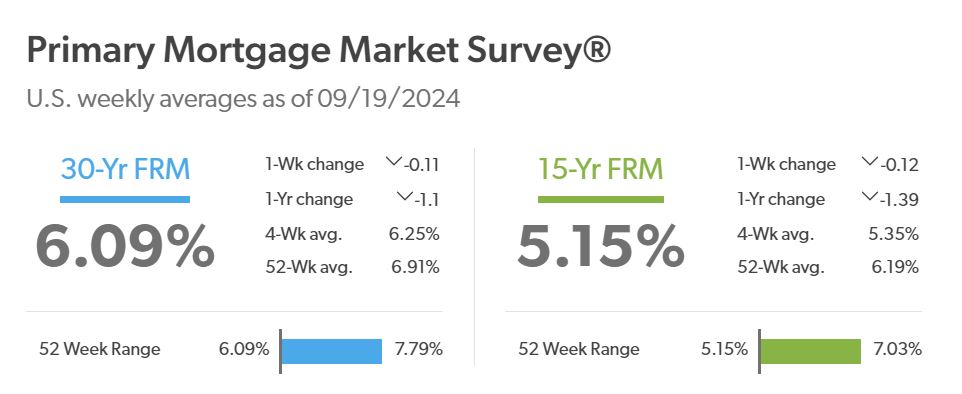
As we look to the future, October 2024 the forecast for mortgage interest rates indicates a possible drop. By the end of October, many experts predict that mortgage rates could be around 5.95% to 6.25% for the 30-Year Fixed Rate Mortgage (FRM). This forecast is driven by several economic factors, including changes in Federal Reserve policy and inflation rates that could influence homeowners’ decisions in the coming months. Mortgage Interest Rate Forecast for October 2024 Key points Current trends: Mortgage rates have come down recently, with the latest average at 6.09% for FRM of 30 years. Projected rates: At the end of October 30-year fixed mortgage rates could range between 5.95% and 6.25%. Economic factors: Developments related to economic growth, Federal Reserve policies, and inflation will have a significant impact on mortgage rates. Impact on the Home buyer: Lower rates could encourage more first-time homebuyers to enter the market. Understanding the current mortgage rate environment The mortgage market always seems to have an air of unpredictability to it. Currently, homeowners and potential buyers are keeping a close eye on economic indicators and announcements from the Federal Reserve. The latest available data from the Federal Reserve Primary Mortgage Market Survey® indicates that the average 30-year fixed mortgage rate as of September 19, 2024, is 6.09%, below the highs reached at the beginning of the year. According to Freddie Mac, as of 09/19/2024, there was a change in 1 week of -0.11% and a One-year variation of -1.1% reflecting improved borrowing conditions for homeowners. Mortgage interest rates are expected to continue their downward trend through October 2024, with several experts predicting rates will be in the 5.75% to 6.5% range by the end of the year. Below is a detailed breakdown of current expectations. Source: Freddie Mac Factors that influence mortgage rates Understanding why rates fluctuate is critical for anyone involved in the real estate industry. Here are some of the most important factors influencing mortgage rates for October 2024: Economic growth The performance of the economy plays a key role in determining the Federal Reserve’s interest rate decisions. As the economy grows, inflation tends to rise. Although inflation has shown signs of stabilizing, any unexpected increase could prompt the Federal Reserve to adjust its policies. Federal Reserve Measures There has been speculation recently about possible rate cuts by the Federal Reserve by the end of the year. If these cuts occur, they could lead to a decline in mortgage rates. The CME Group anticipates an almost 50% chance that the federal funds rate could fall to between 4% and 4.25%. Ultimately, these measures could reduce borrowing costs for families looking to purchase homes. Inflation and consumer spending Inflation remains a thorn in the side of economic stability. Although recent data suggest a moderate outlook, any sudden increase could lead the Fed to reassess its approach. If consumer spending slows after a subsequent increase in mortgage interest rates, housing demand could also fall, leading to further tightening. Housing supply and demand In many regions, the balance between housing supply and demand remains tense. With fewer new constructions and a shrinking stock of existing homes, demand continues to push prices and rates higher. So, if rates fall, demand is stimulated, giving potential homeowners a clearer path to property purchase. Impact on homebuyers in October 2024 For potential homebuyers, lower mortgage rates can mean substantial savings and increased affordability from 6.09% to a projected 5.95% may seem like a minor thing, but over the course of a 30-year mortgage this difference can translate into thousands of dollars. Additionally, if first-time buyers act quickly and take advantage of projected lower interest rates, they can secure homes before the market becomes saturated again. With more people likely to enter the housing market, it is essential for buyers to be prepared and informed about how these changes could affect their purchasing power. Regional variations It’s important to note that mortgage rates can vary significantly across regions. Some markets may experience more fluctuations based on local economic conditions and real estate dynamics. Therefore, potential buyers should pay attention to the specific conditions in their market in addition to national trends. Market sentiments and predictions Analyzing the market can be overwhelming for many people. Recent predictions, such as those of the Business information and CBS News show a collective belief that rates will trend lower through 2024 and potentially into 2025, with some outlooks indicating rates will possibly fall below 6% in the coming months. Experts’ predictions: The Mortgage Bankers Association predicts an average mortgage rate of 6.5% by the end of 2024. Fannie Mae anticipates a slightly lower average of 6.4% for the same period. Other analysts suggest rates could stabilize between 5.75% and 6.0%, depending on economic conditions and future Fed actions. These forecasts reflect a consensus among analysts on the direction of the economy and consumer interest rates, promising several more months of favorable credit conditions for potential home buyers. My opinion on the forecast I believe the next few months will reveal crucial information about home financing. The combination of a slower economic growth rate and the planned actions by the Federal Reserve indicate a positive trend for those seeking a mortgage. It is an exciting period for first-time homebuyers, and I encourage those who have been on the fence to consider entering the market. Several markets are experiencing a slowdown as homeowners postpone selling, waiting for more favorable conditions. This balance contributes to price stability in many areas, making now a good time for first-time buyers to get a loan before prices possibly rise again. In short, the Mortgage interest rate forecast for October 2024 is that the housing market is evolving, and expectations of lower rates provide hope for many potential buyers. By understanding the dynamics that influence these rates (such as economic conditions, Federal Reserve initiatives, and regional market variations), individuals can make well-informed decisions about their future in the housing market. Frequently Asked Questions 1. What is the current average mortgage interest rate? As of September 19, 2024, the

Mortgage Rate Forecast for October 2024: Expert Predictions Read More »