Real Estate

Why a condo could be your perfect first home Why a condo could be your perfect first home

Why a condo could be your perfect first home

If you’re looking to become a homeowner but the price of single-family homes makes you hesitate, you may want to consider a condominium or townhouse. These types of homes often come with a lower barrier to entry, and that can help you start building equity and enjoy the benefits of homeownership sooner. Since they are typically smaller than single-family homes, they can be easier on your wallet. While not always the case, smaller square footage usually comes with a lower price tag as well. Consequently, according to the latest data from real estate agent.com. Condos typically have a lower sales price than single-family homes (see graph below): And here is some interesting news: Homebuilders are focusing more on homes like these. The National Association of Home Builders (NAHB) says: “The proportion of townhouses being built is at an all-time high.” That means there are a large number of options to add to your housing search if you expand it to include condos and townhomes. And you may even find something that fits your budget better. So, if you’re comfortable with a smaller space and want to buy your first home before spring, adding these types of homes to your search could be your answer. The advantages of a condo lifestyle Living in a condominium also has many other advantages. Let’s take a closer look at why condos are attractive to first-time buyers: They help you start building equity. When you purchase a condo or townhome, you build equity and equity as you make mortgage payments and as the value of your condo increases over time. They may require little maintenance. Condos are great if you want to own your place but don’t want to mow the lawn, shovel snow, or fix the roof. Your real estate agent can help explain the associated fees and details of the condos you are interested in. They usually come with a variety of amenities. Your condo may have access to a pool, dog park, or parking. And the best part? You don’t have to take care of any of them. They create a sense of community. Buying a condo means you’ll live close to other people, which is nice if you want a more close-knit feel. Many communities like these host fun events, such as barbecues and parties, to help create that sense of connection between residents. Remember, your first home doesn’t have to be the one you’ll stay in forever. The important thing is to get your foot in the door becoming a homeowner so you can start gaining home equity. Later, that capital can help you buy another place if you want something different. Ultimately, owning and living in a condo or townhome is a lifestyle choice. If you want to see if it makes sense for you, talk to a local real estate agent. Ready to find a home that suits your goals? A condo could be the perfect option for purchasing your first home.

Why a condo could be your perfect first home Read More »

Historical Mortgage Rates Since 1950 Rate Trends Over Time Historical Mortgage Rates Since 1950: Rate Trends Over Time

Historical Mortgage Rates Since 1950: Rate Trends Over Time

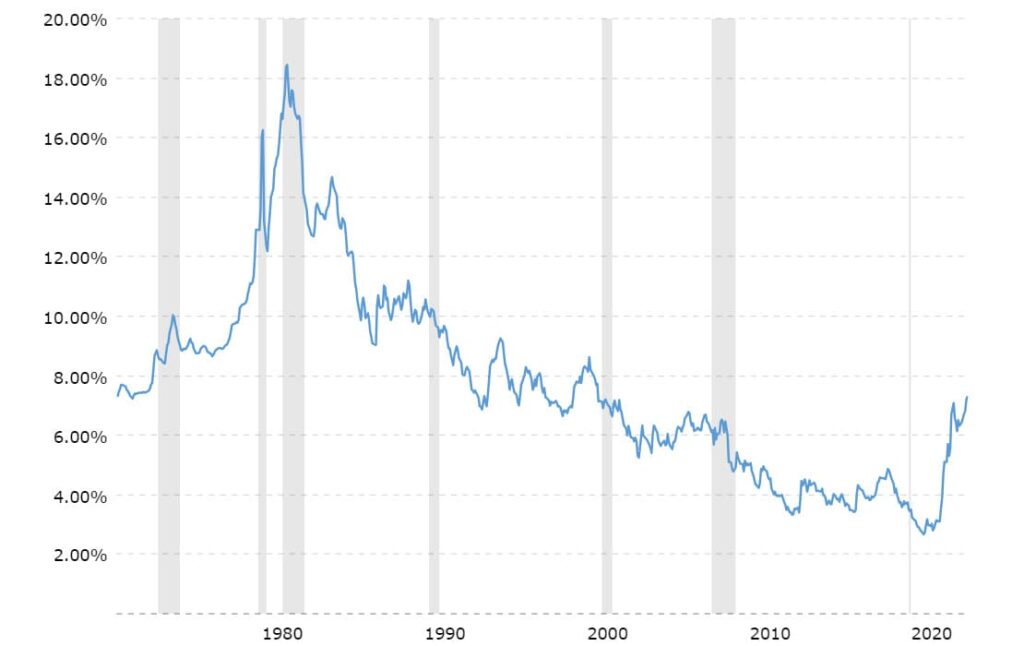
If you are thinking about buy a home or refinance your current mortgage you may wonder how interest rates have changed over time and what factors affect them. In this article, we will take a look at the Historical Mortgage Rate Trends in the US since 1950 to 2023. How have mortgage rates changed per year since 1950? Mortgage rates have fluctuated significantly over time, depending on changes in the factors mentioned above. According to Freddie Mac Primary Mortgage Market Survey (PMMS)which tracks average rates for 30-year fixed rate mortgages since 1971 mortgage rates have ranged from a record low of 2.65% in January 2021 to a record of 18.63% in October 1981. The following table shows the historical trends of 30-year fixed rate mortgage rates from 1950 to 2023 based on data from Freddie Mac PMMS (1971 onwards) and Federal Reserve Economic Data (FRED) (1950 to 1970). As you can see from the graph, mortgage rates have gone through several increasing cycles. over time, reflecting changes in the economic and financial conditions. Fountain Historical changes in mortgage rates since 1950 Some of the notable periods of mortgage rate movements include: The 1950s when mortgage rates were relatively stable and low, averaging around 4%. This was a period of strong economic growth and low inflation after World War II, supported by government spending on infrastructure, defense, education, and social programs. The housing market also benefited from favorable policies, such as low-down payment requirements, long-term amortization schedules, tax deductions for mortgage interest payments, and government-backed mortgage insurance programs. In the 1960s, mortgage rates began to increase gradually, reaching around 7% at the end of the decade. This was a period of moderate economic growth and rising inflation, driven by an increase government spending on social welfare programs such as Medicare and Medicaid, as well as military spending on the Vietnam War.  The real estate market also faced some challenges, due to tighter credit conditions, higher construction costs and urban unrest. The 1970s mortgage rates rose to double digit levels reaching its peak in 12.9% in 1979. This was a period of stagflation characterized by low economic growth and high inflation, caused by oil price shocks, the collapse of the Bretton Woods fixed exchange rate system, and expansionary monetary and fiscal policies. The housing market was also affected by declining affordability, lower demand and lower construction activity. In the 1980s mortgage rates reached record levels hitting 18.63% in 1981 before falling sharply around 9% by the end of the decade. This was a period of disinflation, marked by a severe recession in the early 1980s, followed by a strong recovery in the mid- to late 1980s. The Federal Reserve adopted a tight monetary policy to curb inflation, while the government implemented a fiscal policy that combined tax cuts and spending increases. The real estate market also experienced a boom-and-bust cycle, with high interest rates and low affordability in the early 1980s, followed by lower interest rates and greater demand in the mid to late 1980s. The 1990s saw mortgage rates steadily decreased, reaching around 6.5% by the end of the decade. This was a period of stable economic growth and low inflation, supported by technological innovations, productivity increases, trade liberalization and fiscal consolidation. The housing market also enjoyed sustained expansion, with rising homeownership rates, rising home values, and robust construction activity. In the 2000s mortgage rates fluctuated within a narrow range of 4.7% to 8.6% with an average of around 6.2% for the decade. This was a period of economic volatility and financial instability, marked by the Dotcom bubble and burst in the early 2000s, followed by the housing bubble and bust in the mid-to-late 2000s. The Fed adopted an accommodative monetary policy to stimulate the economy, while the government implemented various fiscal stimulus measures to mitigate the effects of recessions. The housing market also witnessed a dramatic rise and fall, with lax lending standards, speculative demand and excessive leverage fueling a housing boom in the early to mid-2000s, followed by a housing crisis in the late 2000s, that triggered the global financial crisis. In the 2010s mortgage rates reached all-time lows falling below 3.5% for most of the decade. This was a period of slow economic recovery and low inflation, hampered by the aftermath of the financial crisis, the European debt crisis, the US-China trade war, and other geopolitical uncertainties. The Fed adopted an unconventional monetary policy to support the economy, including quantitative easing (QE), forward guidance and near-zero interest rates. The housing market also gradually recovered from the crisis: improving affordability, pent-up demand, limited supply and favorable demographics boosted home sales and prices. The 2020s saw the mortgage rates affected with a historic low of 2.65% in January 2021 in the middle of COVID-19 pandemic before moving on 7% in October 2023 in the midst of the increase of inflationary pressures. This was a period of unprecedented economic disruption and political intervention due to the global health crisis that caused widespread lockdowns, business closures, job losses and income shocks. The Federal Reserve adopted emergency monetary policy to provide liquidity and stimulus to the economy, including reducing interest rates to zero, expanding QE programs, launching new credit facilities, and adopting a new framework that allows greater tolerance to inflation. The government also implemented massive fiscal stimulus measures to provide relief and support to households and businesses affected by the pandemic. The real estate market also defied expectations and performed strongly during the pandemic, despite changing preferences for more space and amenities, limited inventory levels, and strong demand from millennials driving home sale prices to new highs. How are mortgage rates determined over time? Mortgage rates are interest rates that lenders charge borrowers to borrow money to buy or refinance a home. Mortgage rates are influenced by many factors, such as: The monetary policy of the Federal Reserve, which affects the supply and demand of money in the economy. The Federal Reserve can raise or lower its target for the federal funds rate, which is the interest rate that banks


Historical Mortgage Rates Since 1950: Rate Trends Over Time Read More »

Mortgage Rate Forecast for October 2024 Expert Predictions Mortgage Rate Forecast for October 2024: Expert Predictions

Mortgage Rate Forecast for October 2024: Expert Predictions

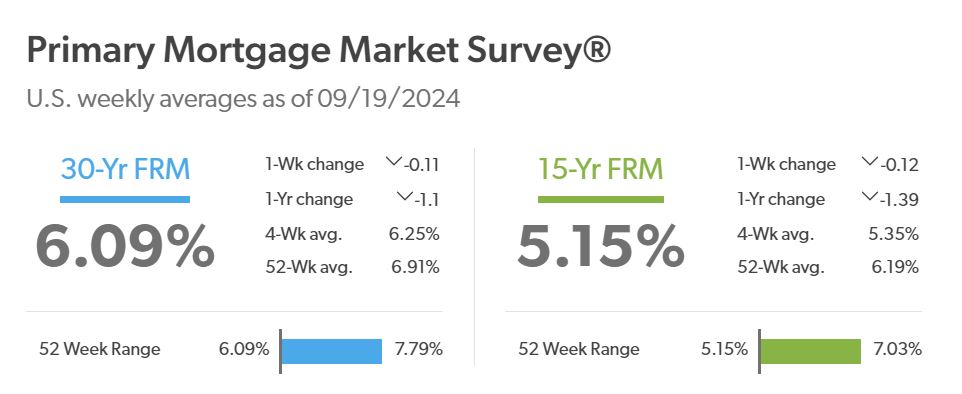
As we look to the future, October 2024 the forecast for mortgage interest rates indicates a possible drop. By the end of October, many experts predict that mortgage rates could be around 5.95% to 6.25% for the 30-Year Fixed Rate Mortgage (FRM). This forecast is driven by several economic factors, including changes in Federal Reserve policy and inflation rates that could influence homeowners’ decisions in the coming months. Mortgage Interest Rate Forecast for October 2024 Key points Current trends: Mortgage rates have come down recently, with the latest average at 6.09% for FRM of 30 years. Projected rates: At the end of October 30-year fixed mortgage rates could range between 5.95% and 6.25%. Economic factors: Developments related to economic growth, Federal Reserve policies, and inflation will have a significant impact on mortgage rates. Impact on the Home buyer: Lower rates could encourage more first-time homebuyers to enter the market. Understanding the current mortgage rate environment The mortgage market always seems to have an air of unpredictability to it. Currently, homeowners and potential buyers are keeping a close eye on economic indicators and announcements from the Federal Reserve. The latest available data from the Federal Reserve Primary Mortgage Market Survey® indicates that the average 30-year fixed mortgage rate as of September 19, 2024, is 6.09%, below the highs reached at the beginning of the year. According to Freddie Mac, as of 09/19/2024, there was a change in 1 week of -0.11% and a One-year variation of -1.1% reflecting improved borrowing conditions for homeowners. Mortgage interest rates are expected to continue their downward trend through October 2024, with several experts predicting rates will be in the 5.75% to 6.5% range by the end of the year. Below is a detailed breakdown of current expectations. Source: Freddie Mac Factors that influence mortgage rates Understanding why rates fluctuate is critical for anyone involved in the real estate industry. Here are some of the most important factors influencing mortgage rates for October 2024: Economic growth The performance of the economy plays a key role in determining the Federal Reserve’s interest rate decisions. As the economy grows, inflation tends to rise. Although inflation has shown signs of stabilizing, any unexpected increase could prompt the Federal Reserve to adjust its policies. Federal Reserve Measures There has been speculation recently about possible rate cuts by the Federal Reserve by the end of the year. If these cuts occur, they could lead to a decline in mortgage rates. The CME Group anticipates an almost 50% chance that the federal funds rate could fall to between 4% and 4.25%. Ultimately, these measures could reduce borrowing costs for families looking to purchase homes. Inflation and consumer spending Inflation remains a thorn in the side of economic stability. Although recent data suggest a moderate outlook, any sudden increase could lead the Fed to reassess its approach. If consumer spending slows after a subsequent increase in mortgage interest rates, housing demand could also fall, leading to further tightening. Housing supply and demand In many regions, the balance between housing supply and demand remains tense. With fewer new constructions and a shrinking stock of existing homes, demand continues to push prices and rates higher. So, if rates fall, demand is stimulated, giving potential homeowners a clearer path to property purchase. Impact on homebuyers in October 2024 For potential homebuyers, lower mortgage rates can mean substantial savings and increased affordability from 6.09% to a projected 5.95% may seem like a minor thing, but over the course of a 30-year mortgage this difference can translate into thousands of dollars. Additionally, if first-time buyers act quickly and take advantage of projected lower interest rates, they can secure homes before the market becomes saturated again. With more people likely to enter the housing market, it is essential for buyers to be prepared and informed about how these changes could affect their purchasing power. Regional variations It’s important to note that mortgage rates can vary significantly across regions. Some markets may experience more fluctuations based on local economic conditions and real estate dynamics. Therefore, potential buyers should pay attention to the specific conditions in their market in addition to national trends. Market sentiments and predictions Analyzing the market can be overwhelming for many people. Recent predictions, such as those of the Business information and CBS News show a collective belief that rates will trend lower through 2024 and potentially into 2025, with some outlooks indicating rates will possibly fall below 6% in the coming months. Experts’ predictions: The Mortgage Bankers Association predicts an average mortgage rate of 6.5% by the end of 2024. Fannie Mae anticipates a slightly lower average of 6.4% for the same period. Other analysts suggest rates could stabilize between 5.75% and 6.0%, depending on economic conditions and future Fed actions. These forecasts reflect a consensus among analysts on the direction of the economy and consumer interest rates, promising several more months of favorable credit conditions for potential home buyers. My opinion on the forecast I believe the next few months will reveal crucial information about home financing. The combination of a slower economic growth rate and the planned actions by the Federal Reserve indicate a positive trend for those seeking a mortgage. It is an exciting period for first-time homebuyers, and I encourage those who have been on the fence to consider entering the market. Several markets are experiencing a slowdown as homeowners postpone selling, waiting for more favorable conditions. This balance contributes to price stability in many areas, making now a good time for first-time buyers to get a loan before prices possibly rise again. In short, the Mortgage interest rate forecast for October 2024 is that the housing market is evolving, and expectations of lower rates provide hope for many potential buyers. By understanding the dynamics that influence these rates (such as economic conditions, Federal Reserve initiatives, and regional market variations), individuals can make well-informed decisions about their future in the housing market. Frequently Asked Questions 1. What is the current average mortgage interest rate? As of September 19, 2024, the

Mortgage Rate Forecast for October 2024: Expert Predictions Read More »

Goldman Sachs expects home prices to rise more than 4 Goldman Sachs expects home prices to rise more than 4% in 2024 and 2025

Goldman Sachs expects home prices to rise more than 4% in 2024 and 2025

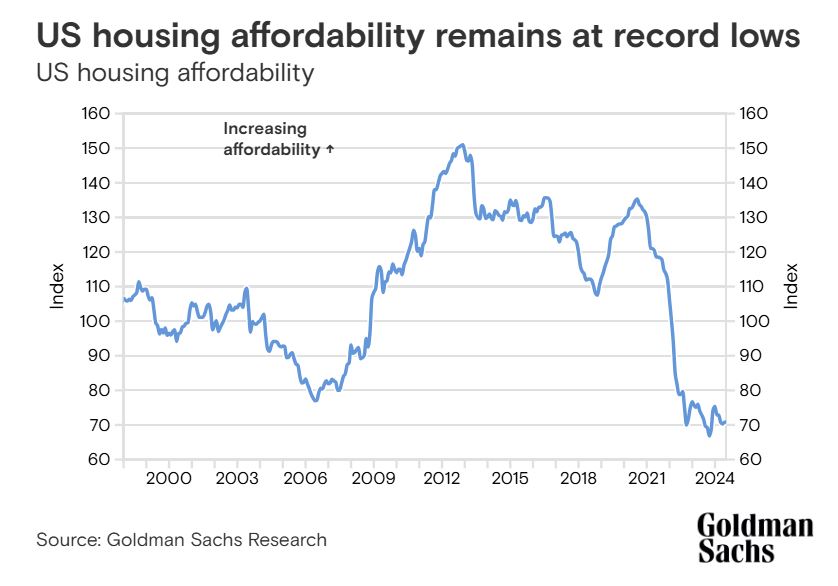
Imagine the hustle and bustle of a busy city where people are always on the move, especially when it comes to buying homes. Goldman Sachs expects home prices to rise more than 4% in 2024 and 2025, a projection that many are watching closely as the housing market continues to show signs of life. With factors such as interest rate changes and the fluctuating job market at play, this forecast raises many questions about what it means for home buyers, homeowners, and those looking to invest in property. Goldman Sachs expects house prices to rise more than 4% in 2024 and 2025 Key findings: Housing prices In the United States, it is expected that they will increase 4.5% in 2024 and 4.4% in 2025. Lower interest rates due to Federal Reserve Stocks are driving this rise. The housing supply remains restricted, contributing to continued price appreciation. Recent Mortgage Rates Fall They have not yet resulted in a significant increase in applications. Different United States regions are experiencing varying levels of price growth, with the Midwest and Northeast showing the strongest increases. US Housing Market Outlook 🏠 Housing prices It is expected to increase 4.5% in 2024 4.4% in 2025 📉 Interest rates Lower rates due to Federal Reserve behavior 📦 Housing offer Still limited Contributing to price appreciation 📝 Mortgage Applications There is no significant increase Despite the recent rate drop 🗺️ Regional variations Midwest and Northeast demonstrating the strongest increases The housing market has always been influenced by a wide variety of factors, and recent analysis by Goldman Sachs sheds light on what could happen next. Goldman Sachs Analysts have raised the price of their housing appreciation forecasts based on several vital factors due to the economy expected to remain strong and interest rates are projected to decline. But what does this mean for the average person? Let’s dig deeper into this important topic. Current trends in housing prices The market has experienced significant fluctuations as a result of economic conditions and global events. At the beginning of the pandemic, many feared a drop in property values. Contrary to expectations, the opposite occurred, as many people opted to purchase their own homes during lockdowns, as demand for housing increased. This caused an unprecedented rise in prices, which peaked at around 20% Annually. Recently, annual house price growth has stabilized around 5.5% indicating that demand is far from being met, especially with a demographic increase of potential buyers looking for homes in the 30 to 39 year age range, who are starting a family. Interestingly, the cost of mortgages has experienced a substantial decline, going from a peak above 7.8% in October 2023 to less than 6.5%. Recently, this decline in mortgage rates paves the way for more affordable home buying opportunities, allowing more potential homeowners the opportunity to enter the market despite historical affordability challenges. Factors driving rising housing prices A key factor driving the rise in home prices as forecast by Goldman Sachs is the expected interest rate cuts by the Federal Reserve. As the labor market shows signs of easing, economists predict that the Federal Reserve will implement multiple rate cuts in the near future. Lower rates mean lower borrowing costs, which in turn make homes more affordable for buyers even as prices continue to rise. Interestingly, the phrase “bad news is probably good news” reflects current market sentiment. Analysts suggest that concerns about economic downturns may lead to interest rate cuts that ultimately benefit home buyers. While concerns about employment continue to circulate, home prices appear to be resilient, with low permanent layoff rates supporting a stable labor market. The affordability conundrum While housing prices are rising, the question of affordability It remains a hot topic. Current affordability levels are said to be the worst since the early 1980s. Anxiety over rising prices has led many to wonder whether potential buyers will be priced out of the market entirely. In the past, affordability issues were often resolved by sudden drops in home prices. However, Goldman Sachs believes the current scenario may lead to a more gradual return to normalized levels of affordability. With mortgage rates expected to decline further and real disposable incomes projected to grow modestly, there may still be hope for buyers looking to enter the market. Regional variations in housing prices The projected growth in home values ​​is not uniform across the United States. According to Goldman Sachs, some regions are experiencing much healthier appreciation rates than others, such as the Midwest. Often recognized as the most affordable area in the country, it is experiencing notable price increases, particularly in cities such as Cleveland and Chicago. The Northeast with centers such as New York and Boston has also shown strong growth in housing prices. On the contrary, in California, markets such as San Diego are thriving, despite historical concerns about affordability challenges. Meanwhile, in the Southeast especially Florida, has shown a decline in affordability that challenges its former status as a budget destination. The future of housing prices and the economy Looking ahead, Goldman Sachs has expressed optimism about the housing market, expecting it to remain buoyant with 4.5% growth in 2024 and 4.4% in 2025. There are a couple of factors contributing to this positive outlook. First of all,  expected interest rate cuts and lower borrowing costs seem likely to spur buyer activity when it comes to mortgages. Analysts predict that lower borrowing costs will help buyers who have been on the fence for some time. Secondly, while affordability issues persist, income growth rates are expected to remain positive, providing more purchasing power to buyers. The challenge is to see whether these factors will create a balance, stabilizing the market without causing a drastic fall in housing prices. Consumer sentiment and market expectations Despite notable changes in mortgage rates, the market has yet to see a surge in mortgage applications. This stagnation could be due to a combination of seasonal predictability and buyer reluctance to enter a fluctuating market. As families begin

Goldman Sachs expects home prices to rise more than 4% in 2024 and 2025 Read More »

Could a 55 community be right for you Could a 55+ community be right for you?

Could a 55+ community be right for you?

You may have heard about 55+ communities and wondered if they would be a good fit for you. Here is some information that might help you make your decision. What is a community of people over 55 years old? It’s important to note that these communities are not just for people who need extra support; they can also be very dynamic. Many people choose this type of housing because they want to be surrounded by people at a similar stage in life. US News explains: “The terms ’55+ community,’ ‘active adult community,’ ‘lifestyle communities,’ and ‘planned communities’ refer to an environment that serves the needs and preferences of adults age 55 and older. These communities are designed for seniors who can care for themselves but may be looking to move to a smaller community with others their own age and with similar interests..” Why this type of housing is worth considering If this sounds like something you might be interested in, here’s something to consider. You may find that you have an ever-growing list of options if you look into this type of community. According to 55places.com the number of listings designed for home buyers in this age group has increased by more than 50% compared to last year. It could make your move a lot less stressful because it’s easier to find something that’s specifically designed to fit your needs. Other community benefits for people over 55 years of age In addition to that, there are other benefits in regard to this type of housing. An article by 55places.com highlights just a few: Low maintenance housing: Tired of mowing the lawn or pulling weeds? Many of these communities take care of this for you. So you can spend more time doing fun things and less time on maintenance. On-site services: Some feature lifestyle amenities such as a clubhouse, fitness center, and more, making it easy to stay active. Additionally, others offer media rooms, libraries, spas, arts and crafts studios, and more. Like-minded neighbors: Additionally, these types of homes often offer clubs, outings, meetups, and more to foster a close-knit community. Accessible floor plans: Not to mention, many have first-floor living options, ample storage spaces, and modern floor plans so you can have a home that’s tailored to this stage of your life. If this sounds appealing to you, let’s talk about what’s available in our area and the unique amenities of each community. A 55+ home may be exactly what you’ve been looking for.

Could a 55+ community be right for you? Read More »

If you don39t do any renovations to your home should If you don't do any renovations to your home, should you offer discounts when selling it?

If you don't do any renovations to your home, should you offer discounts when selling it?

Last updated on August 1, 2024 A move-in ready home is highly desirable and tops most buyers' wish lists. However, if your home needs a lot of TLC, you may be wondering what your options are when it comes time to sell. Should you offer discounts on your home or invest time, energy, and/or money into updating certain spaces before listing it for sale? In today's post, we'll examine your options, taking into account the conditions of the real estate market right now. The homes on the market today fall into one of two groups Right now, there are two groups in terms of homes that are on the market. In the first group, we have houses with fair prices and in good or excellent condition. These houses sell in an average of 10 days. In the second group, there are homes that are not priced fairly and are not in good condition, and these homes sit on the market for 60 to 70 days and often sell after one or two price reductions. Are sellers offering concessions for homes that aren't move-in ready? In reality, we don't see many concessions for cosmetic improvements. Our real estate agents advise clients to price homes correctly from the start, meaning that the price reflects the state of the work needed. We are seeing more concessions being made on closing costs than recently, but that is generally to cover necessary repairs to a home. Does it make sense to improve my home before putting it up for sale? Our agents get this question very often and unfortunately there is no clear answer. Generally, the houses that are in the best condition are the ones that sell for much more than the asking price. However, the types of updates or repairs are different for every home, and the best thing you can do is contact your real estate agent many months before you plan to list your home to start a conversation about how to maximize the value of your home. Our agents offer a Physical startwhere you will be given a rough estimate of the value of your home in relation to the current market, as well as recommendations for repairs or improvements that will give you a return when you sell it. For example, many homeowners are surprised to discover that a large-scale kitchen or bathroom remodel doesn't make sense in terms of recouping their money years from now when they sell. Minor improvements to the kitchen or bathroom often pay off better than investing a lot of money in those areas. Exterior improvements are also always a good idea and often pay for themselves when the house is sold. It's never a bad idea to replace an old entry or garage door. Of course, there are always exceptions to the rule in terms of what you should or shouldn't upgrade, and these vary by area and even by neighborhood, so you should always contact a real estate agent who specializes in your general area first. Keepp reading: 14 items you shouldn't renovate before selling Visited 742 times, 35 visits today

If you don't do any renovations to your home, should you offer discounts when selling it? Read More »